
3 Takeaways From LocalUp Event Marketers Can’t Ignore
Seattle-based online marketing giant Moz and Local University partnered last weekend on the first ever LocalUp Advanced event. The event was a convergence of the top minds in local search and local online marketing, and attracted hundreds of expert practitioners, agencies and businesses looking to beef up their local SEO game.
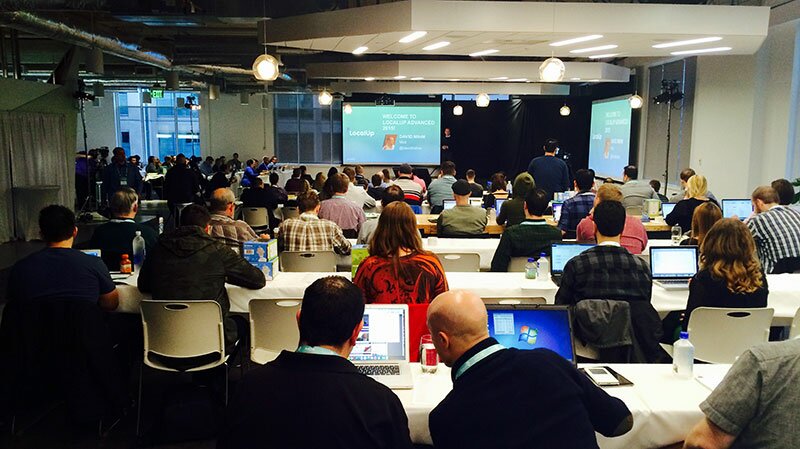
Spyder Trap’s COO Aaron Weiche presented at the event, bringing his expertise on mobile design and mobile search. Aaron spoke on how to thrive in today’s complex mobile ecosystem. After getting the full event download via Aaron, we’ve compiled a brief list of takeaways not to be ignored!
1) Keep an eye on Google Maps
When Google Maps first arrived on the digital scene, it barely survived. But, as Mike Blumenthal (aka Professor Maps) pointed out in his presentation on the history of Google Maps, the possibilities for the future are endless.
Each year Google’s technologies continue to evolve and improve, and now they are a vital component of local search strategies. Google Maps ain’t going away. In fact, there’s more to Google Maps than meets the eye.
Learn more about how Google Maps affects your business and how to future proof for what’s coming here.
2) Yelp! Can Be An Advertising ROI Bust
According to David Mihm’s presentation, Yelp advertising is a rip-off for small advertisers. He cited a study of one client, who after spending $3,000 in six months only gleaned 450 impressions and 36 clicks. That put the cost per thousand impressions at $6,600 and the cost per click at $83 — a steep price for online advertising. What’s a better tool to utilize? Google Display Network ads with the Yelp website, which under the same campaign garnered a cost per thousand impressions of $1.58 and a cost per click of $4.32.
Numbers don’t always tell the full story, but the disparity here is something to consider if Yelp is in your digital marketing strategy and budget.
3) Build an ecosystem that will make your mobile efforts grow
Of course, we’re partial to Aaron’s presentation. But, from an objective standpoint it was right on target. While local search is highly granular and tactical, sound methodology and design are crucial to a great mobile web experience. The elements needed to thrive in a mobile ecosystem are Land (Website), Aquatics (Content & Usability) and Air (Google Search).
To be successful, the landscape of your website should be responsive for all devices; the content should involve deep experiences that are highly functional and do the work for the user; and the search strategy should be targeted and frequently analyzed for performance.
“If you only have one of these components in place, the mobile ecosystem will not be sustainable,” Weiche says. “If you have all these marketing pieces in place however, you have a much stronger environment that gives you reliability, longevity and growth.”
The bottom line? If you are missing water, land or air, you won’t have a complete mobile ecosystem — you’ll only have an element of it.
Tweet Highlights:
@Amitch5903: “Mobile content doesn’t mean less content” @AaronWeiche at #localup
@butchgle: People like to exercise their free will ~ “Give users a choice” in terms of options with where to leave a review #localup thnx @mblumenthal
@GregGifford: Make your website a topical authority in your industry AND your location @marybowling #localup
@paramaya: Google has control of local map data that no one else in the world has. @mblumenthal #LocalUp
@m_j_gregory: “The next 5 years will be some of the most exciting in local search.” – @mblumenthal #localup
Want to Read More?
Check out all the slide decks from Moz’s LocalUp Advanced event here.