
On April 2nd, Google made it official: Universal Analytics is now out of beta. This milestone indicates that Universal Analytics is closer to becoming the gold standard for tracking web and device metrics.
Despite the unavoidable learning curve inherent in adoption, Universal Analytics promises to deliver improved audience insights across a full spectrum of devices. Google hasn’t said exactly when users will be required to switch from traditional analytics packages to Universal Analytics, but we expect this to happen in the coming months.
What can Universal Analytics do for your web properties?
Universal Analytics provides actionable data that can be converted into improved targeting and tactical decision making. Key improvements upon Google’s traditional analytics capabilities include multiple device behavior tracking via unique user IDs, custom dimensions and metrics, and unique tracking codes that allow for data collection from nearly any device.
Multiple device, session & engagement tracking
First, consider the user ID and session unification features: These allow single users to be seamlessly tracked across all of their devices as they interact with digital properties. This helps us discover if and when device overlap is taking place, which devices produce higher conversions as well as how customers and visitors interact with your content across all of their devices.

More importantly, user IDs eliminate duplicate data. By giving each user a unique ID, they only show up once across all devices you’re tracking – as opposed to multiple times. In traditional analytics packages, users are counted separately with each device you track.
In a world where the average US consumer owns four devices and spends sixty hours a week consuming content across devices, Universal Analytics’ tracking capabilities will become increasingly crucial to success.
Custom dimensions & metrics unique to specific business needs
Current Google Analytics users can track conversions, events, traffic and user activity as well as a slew of other pre-defined metrics. Universal Analytics takes it to the next level by allowing marketers to set custom dimensions and metrics for tracking. As Google points out on their blog, this could include distinguishing members and non-members of an online service and segmenting data based on their behavior AND membership status.
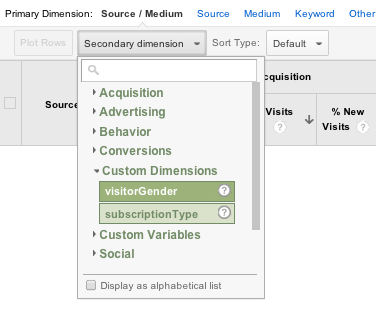
(Image© Marketing Land)
But that’s just the start. Nearly any quantifiable online metric is now trackable and can be segmented in your data. Here are two examples: An online retailer could now segment visitors by transaction amounts compared to age. Or, an online gaming site could track game score versus average time on site, against the age of the player. Again, that’s just the beginning.
This enhanced tracking will provide both a higher level of user detail and an amazing opportunity to serve multiple users needs based on much more specific activity-based data, when compared to traditional analytics.
Unique tracking codes allow data collection from new devices
Universal Analytics also introduce three new versions of the tracking code. One for website, one for mobile app tracking and one for “other” devices (kiosks, offline data, gaming devices). This will allow developers to more easily integrate and track audience activity while outside of mobile, tablet and desktop ecosystems.
Key Takeaways
The biggest challenge with Universal Analytics will be translating new, richer data streams into actionable and sensible online strategies. Keep in mind that with this increased access to user data comes a huge responsibility: We must treat increased access to our customers and audience with caution and respect. Just because we can target and track more, doesn’t necessarily mean we should message, ping and barrage our customers more. If anything, the opposite should be true. Knowing more about our audience will empower us to target, communicate, or sell to them exactly when they want us to.
To learn more about Spyder Trap’s Search Marketing and Analytics expertise, click here.