

This is the second post in a series on the switch to Facebook Timeline. Read the first post.
Last week, Liz discussed the first steps businesses need to make before this Friday’s switch to the new brand page format. But once you’ve uploaded your cover photo and added pictures for your Facebook tabs, where do you go from there?
After taking those initial steps, there are two tactics you should consider as you move forward with your Facebook strategy.
2 Biggest Facebook Timeline Opportunities After The Switch
1. Highlighting Posts
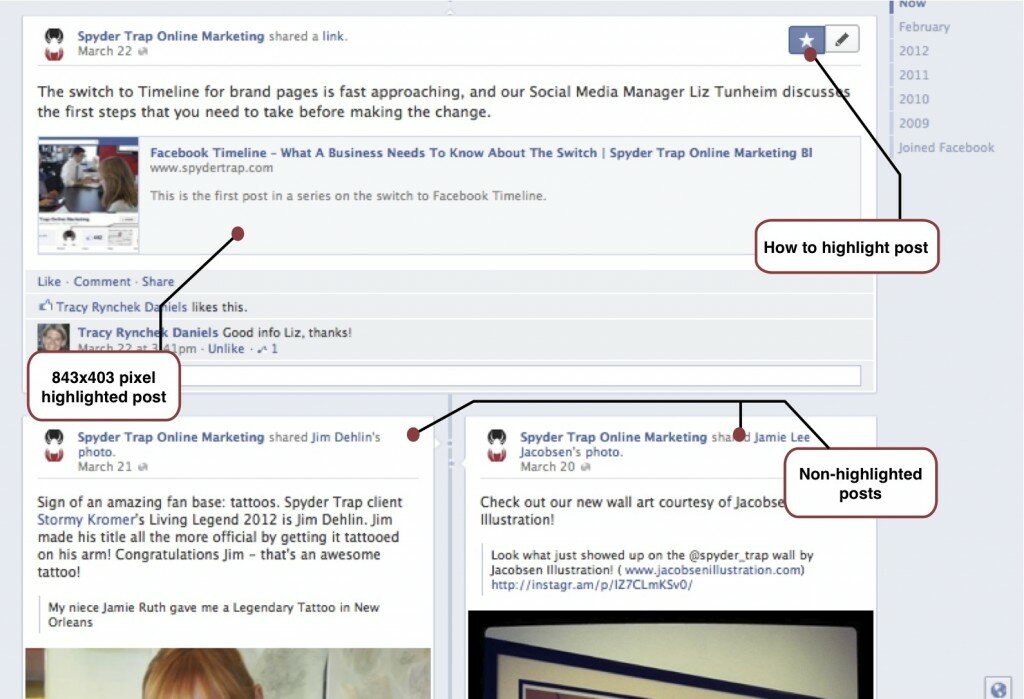
While consistently producing new content is still crucial, Facebook will now allow you to highlight posts. Highlighting a post will pin it to the top of your brand page’s feed for 7 days.
Highlighting a post also increases its size, and will stretch the post across the 843-pixel space on the Facebook page, instead of the post being relegated to one of the two columns on the feed.
From a strategic standpoint, this will let you call out important posts without burying it in your feed with newer content. For example, if you’re running a contest on Facebook, you can highlight a post directing people to the promotion so anyone who visits your page during the next 7 days will see that post right away.
Of course, highlight posts in moderation; otherwise you will limit the visibility of any new content that you post during that period.
2. Build Out The Timeline
An even bigger opportunity than highlighting posts, however, is the timeline feature, which allows brands to add historical content to show how their company was formed and how it evolved in the pre-Facebook days.
The possibilities of what that content could be are endless, whether it’s old advertisements, pictures of the product through the years, or old news links about the brand. Coca-Cola has done an especially good job of building their timeline, and is a great example to follow.
There are other benefits to building out the timeline as well. First, I’m starting to see Facebook contests that utilize the timeline. Fanta is currently running a promotion on their page that has people search through their timeline and “like” certain photos.
As more brands build out their timelines, promotions like this will become more and more commonplace. In fact, I could easily see these timeline contests overtaking photo submission contests as the go-to promotion on Facebook by this time next year.
Secondly, the timeline will give you additional material to add to your overall content mix. People like the nostalgia factor with brands, and telling the story of your brand is a good way to engage those users.
Facebook’s shift to Timeline solidifies the social network’s goal to be more than just a broadcasting platform or a conversation piece between friends. Facebook wants to be a scrapbook of person’s life; a digital record of what’s important to them on a personal level.
Brands can, and should, take this to heart with their Facebook strategy from now on. All of these changes may be a huge shift, but it’s also a huge opportunity to step back and reevaluate your social strategy.
